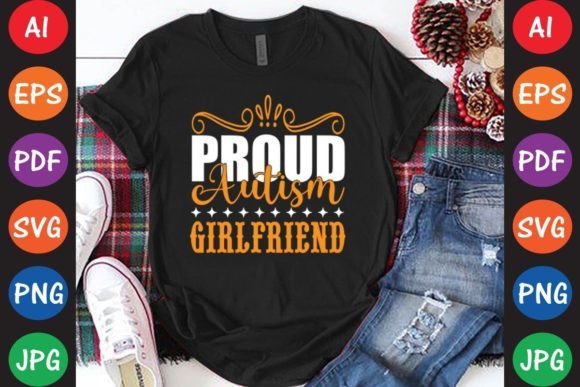
Proud Autism Girlfriend
First Impression: Warm, Clear, and Thoughtfully Framed
When I opened Proud Autism Girlfriend for the first time, I didn’t see just another T-Shirt Designs graphic—I saw a design with quiet confidence. The composition balances soft curves and clean lines: a gentle heart motif wraps around the phrase like a hug, not a shout. The font is friendly but legible—no fragile serifs or overly stylized swashes that vanish under satin stitch. It’s got warmth without saccharine overload, clarity without coldness. That matters immensely when you’re translating pixels into thread.
A Real-World Test: Embroidering a Linen Tote for a Local Autism Awareness Pop-Up
Last week, I used Proud Autism Girlfriend on a natural linen tote bag—medium-weight, slightly textured, no stretch. I chose a 4” hoop and medium-cutaway stabilizer. The result? Crisp lettering, smooth satin-stitched heart edges, and zero puckering. What stood out wasn’t just technical success—it was how the finished product felt *human*. Customers paused, smiled, asked questions. One mom bought three: one for herself, one for her daughter’s therapist, one to gift at an IEP meeting. That kind of resonance doesn’t come from flashy graphics—it comes from thoughtful design rhythm, intentional spacing, and emotional authenticity. Proud Autism Girlfriend delivers that.
Where It Shines (and Where It Asks for Care)
This design works beautifully across several embroidery project types—but not all equally. Here’s my real-use breakdown:
- Custom apparel & sweatshirt embroidery: Excellent. The letter height and heart size scale well from S to XL. Avoid ultra-thin jersey tees unless you add tear-away + topping—fine details hold up, but lightweight fabric needs extra support.
- Embroidered patch or tote bag design: Ideal. Medium fill stitch density means it won’t overwhelm cotton duck or canvas, and the balanced negative space keeps it breathable—not heavy or stiff.
- Baby embroidery & nursery decor: Gentle and age-appropriate. Works on onesies, pillow covers, and tea towels—just confirm thread colors are Oeko-Tex certified if selling to parents.
- Caps & curved surfaces: Proceed with caution. The heart shape sits comfortably near a cap’s front panel, but avoid placing the full phrase over the crown curve—the “Girlfriend” line may distort. Test stitch a single word first.
- Dark fabric & layered garments: The design’s contrast relies on clean outlines and open letterforms. On black or navy, use bright white or pale yellow thread—not cream—to preserve legibility. Skip dense underlay; let the top stitches define shape.
What You’ll Notice After Stitching (Not Just Before)
Once stitched, Proud Autism Girlfriend reads as handmade—not digital. That’s rare. Many machine embroidery designs look crisp in software but flatten into monotony on fabric. This one retains personality: the heart has subtle weight, the “Proud” ascender lifts gently, and the kerning avoids robotic uniformity. That nuance builds customer trust. When someone sees this on a boutique apron or holiday gift pillow, they don’t think “SVG file”—they think “someone cared.” That perception directly lifts perceived value, repeat orders, and Etsy seller ratings.
Practical Designer Notes Before You Stitch
Before committing to your first production run—or listing it as a digital embroidery file on your shop—here’s what I always do with Proud Autism Girlfriend:
- Run a test on scrap fabric matching your final product’s weight and texture. Linen ≠ cotton poplin ≠ fleece.
- Check thread color contrast in both light and dark mockups—not just on screen. A warm gray might disappear on heather charcoal.
- Review stitch density in the heart fill area. If your machine struggles with tight satin columns, reduce density by 5–8%—it won’t weaken impact.
- Confirm hoop size compatibility. The design fits comfortably in a 4” x 4”, but pushing into 3” x 3” risks losing definition in the lowercase “g” and heart curve.
- Inspect small details in PNG and SVG previews. Some versions render tiny gaps between letters differently—verify spacing consistency before digitizing or resizing.
- Test black-and-white printable mockups. If it holds presence without color, it’ll translate cleanly to embroidery.
- Use proper stabilizer—especially for textured or knit fabrics. A lightweight cutaway prevents shadowing behind satin stitch.
- Double-check licensing. Since this is distributed as a Graphics digital product—including AI, EPS, SVG, PNG, and PDF—you must verify commercial use rights before selling finished embroidered items or reselling the files.
Who This Design Truly Serves
Proud Autism Girlfriend isn’t built for mass-print warehouses or generic promo shops. It’s for the craft business owner who hand-selects every thread, the Etsy seller who writes heartfelt notes with each order, the small shop curating meaningful nursery decor, and the maker stitching gifts for neurodivergent loved ones. It supports brand consistency because it feels intentional—not trendy. It boosts giftability because it’s specific without being exclusionary. And it earns buyer engagement because people recognize sincerity faster than symmetry.
Final Thought: Design With Purpose, Not Just Pixels
As an embroidery designer and reviewer, I’ve tested hundreds of digital embroidery files. Few land with the same blend of practicality and heart as Proud Autism Girlfriend. It doesn’t try to be everything—it knows its voice, its audience, and its place on fabric. Whether you’re embroidering a kitchen towel for a teacher, a patch for a sensory-friendly backpack, or a personalized sweatshirt for a graduation gift, this design carries weight without heaviness. Use it thoughtfully, test it honestly, and let its quiet pride speak for itself.