Bee Positive: A Designer’s Real-World Embroidery Review
First Impressions: Cheerful, Clean, and Commercially Smart
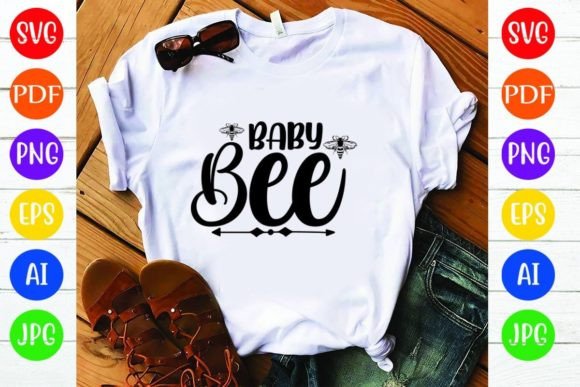
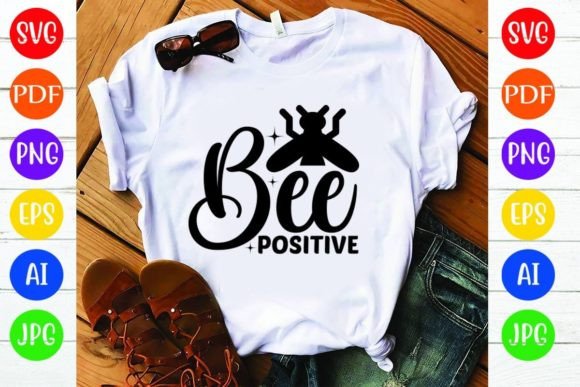
When Bee Positive landed in my inbox, I opened it expecting another cheerful-but-generic bee motif. Instead, I found a design with quiet confidence—balanced proportions, intentional negative space, and a friendly yet polished personality. It’s not overly cutesy or cartoonish; the wings have subtle contour lines, the body has gentle dimension, and the “Positive” text sits comfortably beneath without crowding. As a machine embroidery designer who’s stitched hundreds of nature-themed motifs, I immediately sensed this one would translate well—not just as a T-Shirt Designs graphic, but as a versatile embroidery file for real products.
A Real Project Test: Embroidering a Linen Tote Bag for a Local Boutique
Last week, I used Bee Positive on a natural linen tote for a small shop launch. Why linen? Because it’s unforgiving—loose weave, minimal stretch, and zero forgiveness for dense stitch areas or poorly stabilized fills. I chose a medium hoop size (5" × 7") and paired it with tear-away stabilizer + light cutaway backing. The result? Crisp satin-stitched wings, clean fill-stitch body sections, and legible lettering—even at 3.2" wide. Customers loved the tactile warmth of the embroidery against the textured fabric, and the design held up beautifully after two rounds of gentle machine washing. That tells me Bee Positive isn’t just printable—it’s *stitchable*, with thoughtful spacing and moderate stitch density.
Where It Shines (and Where to Pause)
Bee Positive works exceptionally well for:
- Custom apparel: Especially on cotton tees, lightweight sweatshirts, and structured caps—its compact height (roughly 3–4" tall) avoids overwhelming smaller garments.
- Baby embroidery: Soft curves and no tiny, high-risk details (like antennae thinner than 0.8mm) make it safe for onesies and burp cloths.
- Embroidered patch production: The clean outlines and consistent stitch direction lend themselves to crisp, peel-and-stick or sew-on patches.
- Holiday embroidery & personalized gifts: It reads warmly on kitchen towels, pillow covers, and nursery decor—especially when stitched in honey-gold or sage thread on cream or oat fabric.
- Craft business branding: As a Graphics asset, it scales cleanly for printable mockups, social media banners, and Etsy listing thumbnails—no pixelation, even at 200% zoom.
But here’s where I’d advise caution:
- Stretchy fabrics: While the design itself isn’t overly dense, its curved elements can distort on knits without proper stabilizer pairing—always test on scrap jersey first.
- Dark or textured fabrics: The fine interior wing lines may soften on heavy terry cloth or deep charcoal fleece. Consider simplifying those details or increasing contrast via thread choice.
- Curved surfaces like baseball caps: The lower “Positive” text flows horizontally—great for flat panels, but may require repositioning or slight distortion correction for front-panel cap embroidery.
- Tiny hoops (under 4"): Scaling below ~2.5" risks losing definition in the lettering and wing veining. Stick to 3" minimum for clarity.
What It Adds to Your Finished Product—Beyond Just Looks
Bee Positive doesn’t just decorate—it elevates. On a handmade product, its balanced weight and positive messaging subtly reinforce trust: customers see care in composition, not just clipart. For an Etsy seller, that translates to higher perceived value and fewer “Is this really hand-embroidered?” questions. As a commercial embroidery file, it supports brand consistency across tote bags, aprons, and tea towels—same visual language, different context. And because it’s delivered in AI, EPS, SVG, PNG (transparent), and PDF formats, you’re covered whether you’re prepping for Brother PE-Design, Hatch, or Illustrator-based digitizing adjustments.
Practical Designer Notes Before You Stitch
Before committing to your first run, do these five things:
- Test on scrap fabric—not just the same fiber, but the same weight and finish as your final product.
- Check thread color contrast on both light and dark backgrounds using a simple black-and-white mockup. Does the message still read clearly?
- Review stitch density visually in your embroidery software—if you see overlapping satin columns or tightly packed fill areas, consider adjusting underlay or reducing density by 5–10%.
- Confirm hoop size compatibility with your machine and project surface. If stitching on a curved item like a baby blanket edge, verify clearance around the hoop.
- Inspect small details at 200% zoom: Are wing lines distinct? Is the “g” in “Positive” legible at your target size? If not, simplify before digitizing.
And one final note: Since this is marketed as a Graphics asset with editable formats—including AI and EPS—verify licensing terms directly with the creator before selling finished embroidered items at scale or bundling the digital files in your own craft business kits. Clarity there protects both your time and your reputation.
Final Thought: Not Just a Bee—A Reliable Design Asset
Bee Positive won’t wow with flash or complexity—but that’s its strength. In the daily rhythm of running a craft business, launching Etsy listings, or fulfilling custom orders, reliability matters more than novelty. It’s the kind of embroidery file you’ll reach for again: for a last-minute baby gift, a boutique’s seasonal refresh, or a batch of embroidered kitchen towels that sell out before you post them. It feels human-made, not algorithm-generated—and that makes all the difference when your customer holds the finished product in their hands.