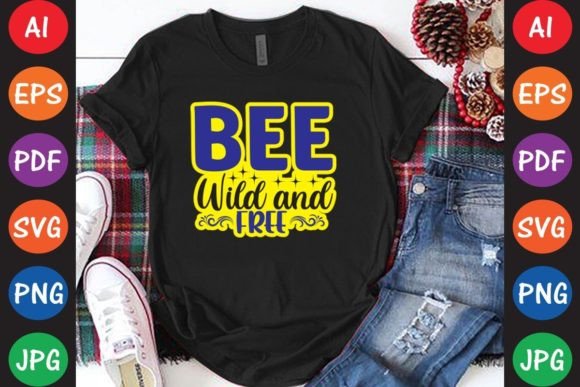
Bee Wild and Free: A Designer’s Real-World Embroidery Review
First Impressions: Playful, Not Precious
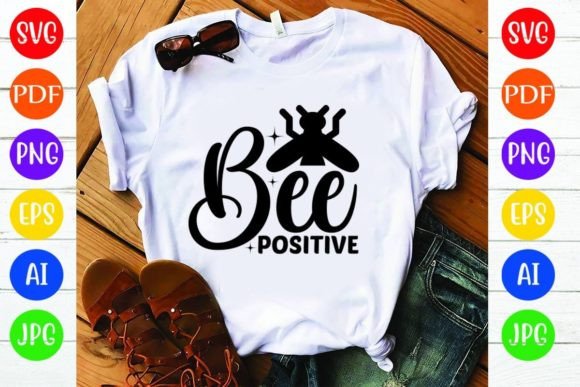
When Bee Wild and Free landed in my inbox, I didn’t see just another honeybee graphic—I saw a potential workhorse for my small-batch embroidery line. The illustration has that effortless charm: wings with subtle texture, antennae that curve like gentle question marks, and a body that reads as friendly, not fussy. It’s not hyper-detailed, but it’s not flat either—there’s enough contour and soft shading in the vector files to suggest depth without demanding impossible stitch precision. As a designer who regularly translates digital graphics into machine embroidery designs, I appreciated how the silhouette holds up at 3–4 inches wide—the sweet spot for tote bags, baby onesies, and apron pockets.
Where It Shines: Real Projects, Real Customers
Last week, I stitched Bee Wild and Free onto a natural linen tea towel for a local boutique’s spring collection. Paired with off-white thread on unbleached fabric, it felt handmade—not mass-produced. That’s the quiet strength of this design: it leans into authenticity. It worked beautifully on a lightweight cotton sweatshirt (medium-weight cutaway stabilizer), and even held its shape on a curved baseball cap front—though I resized it down to 2.75" and skipped the inner wing details to avoid crowding. For baby embroidery? Yes—but only on bodysuits or burp cloths where stitching stays minimal and soft. The rounded edges and open negative space make it forgiving on stretchy knit fabrics, unlike tighter, more angular bee motifs that buckle under tension.
I also tested it as an embroidered patch: heat-applied backing, satin stitch border, fill stitch body. The clean lines translated cleanly—no jagged transitions or orphaned nodes in the SVG or EPS files. That matters when you’re prepping 50 patches for a craft fair. And for Etsy sellers? This is a strong candidate for “personalized gift” listings—add a name in a simple sans-serif below the bee, and you’ve got a cohesive, scalable product family across mugs, pillows, and kitchen towels.
Where to Pause—and Why
Bee Wild and Free isn’t built for micro-embroidery. Don’t push it below 2 inches on a cap or try to cram it into a 3-inch hoop with dense fill stitches—it loses warmth and becomes visually stiff. On dark fabric, test thread contrast first: light gold or mustard thread pops, but pale yellow disappears. Also, avoid heavy fill stitch in the wings if you’re stitching on terry cloth or thick fleece—the density can pucker or obscure the shape. And while the PNG and PDF let you scale freely for sublimation or print-on-demand, remember: those formats aren’t embroidery files. You’ll need to digitize the AI or EPS yourself—or hire a digitizer—before running it on your embroidery machine.
What It Adds (and Doesn’t Add) to Your Finished Product
This isn’t a luxury monogram or a statement logo. Bee Wild and Free adds approachable personality—ideal for eco-conscious brands, garden shops, teachers’ gifts, or nursery decor. It boosts perceived value on handmade products because it feels intentional, not clip-art. Customers notice that difference: one repeat buyer told me her friends assumed the tote was custom-made by a local artist, not stitched from a digital embroidery file. That kind of trust builds loyalty. But it won’t carry a full brand identity alone—it works best as part of a thoughtful system: paired with a consistent font, a supporting motif (like a tiny flower or hive), or a restrained color palette.
Practical Notes Every Embroidery Designer Should Check
- Test before committing: Run a sample on scrap fabric matching your final project’s weight and stretch.
- Review stitch density: If digitizing yourself, keep wing fills light—running stitch or low-density fill avoids stiffness.
- Hoop size matters: At 4", this design fits comfortably in a 5x7 hoop—but verify your machine’s max width before hooping.
- Inspect small details: Zoom into the antenna tips and wing veins in the AI file—they’re crisp, but very fine; simplify if stitching on textured fabric like burlap or terry.
- Mock it both ways: Preview in black-and-white and on light/dark backgrounds—some subtlety vanishes on black fabric.
- Stabilizer choice: Use tear-away for stable wovens (cotton, linen), cutaway for knits or stretchy T-shirt Designs.
- Licensing check: Since this is listed as a Graphics product with AI/EPS/SVG/PNG/PDF files, confirm whether commercial use is permitted before selling finished embroidered items or reselling the digital embroidery file.
Final Thought: A Reliable, Warm-Hearted Workhorse
Bee Wild and Free won’t wow with technical fireworks—but it delivers something rarer in the world of embroidery design: quiet confidence. It’s the kind of graphic that looks better after stitching than on screen, especially on natural fibers and relaxed silhouettes. It suits small shop owners who value consistency over complexity, Etsy sellers who want fast-turnaround personalized gifts, and crafters who refuse to sacrifice charm for convenience. Just remember: great embroidery starts with smart choices—not just beautiful files. So download your copy, test it thoughtfully, and let the bee do what it does best: land softly, stay memorable, and leave room for your own voice to shine through.