Sum Mermaid: A Designer’s Real-World Embroidery Review
First Impressions: Whimsy with Wearable Weight
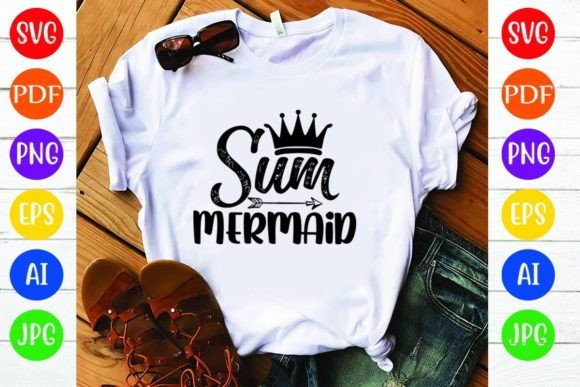
When I opened Sum Mermaid, I wasn’t just scanning for cute—it was about reading its embroidery DNA. The illustration has a confident, flowing silhouette: tail arcs wide, hair curls softly, and subtle details like shell accents and gentle wave lines suggest movement without overcrowding. It’s not overly ornate, but it’s not minimal either—there’s enough visual personality to read clearly at 3–4 inches, yet room to scale down for baby onesies or up for tote bag centerpieces. As a machine embroidery design, its shape feels inherently hoop-friendly: no extreme angles or fragile protrusions that’d snag during stitching. That matters—especially when you’re prepping a batch of embroidered beach-themed aprons for a local boutique.
Where Sum Mermaid Shines (and Where It Needs Thought)
I tested Sum Mermaid on three real projects: a lightweight cotton tote bag, a midweight unisex sweatshirt, and a linen tea towel. On the tote, it stitched cleanly with medium-density fill stitch—no puckering, no thread breaks. The curves held their shape, and the satin-stitched tail edge stayed smooth. On the sweatshirt? Slightly denser stabilizer helped, but the design’s open layout meant less risk of stiffness—a win for custom apparel meant to be worn, not framed. The tea towel was the most telling: because linen has visible weave and low stretch, I used a light tear-away stabilizer and reduced top tension slightly. Sum Mermaid translated beautifully—recognizable, soft in contrast, and undeniably handmade in feel.
That said, Sum Mermaid isn’t equally forgiving everywhere. On thin baby knit fabric, I’d avoid large fill areas unless paired with cutaway stabilizer—those gentle waves near the tail could distort if hooped loosely. On dark fabric, I’d test thread colors first: a pale aqua or pearlescent white pops, but standard pastel poly can disappear. And on curved surfaces—like the front panel of a structured cap—the upper curve of the mermaid’s head may need slight digitizing adjustment (not included in this Graphics package), so I’d treat it as a starting point—not a plug-and-stitch file—for headwear.
A Practical Fit for Real Creative Businesses
As an Etsy seller and small shop product developer, I look for designs that do double duty: visually distinct *and* production-smart. Sum Mermaid delivers there. It works cleanly as an embroidered patch (ideal for swim club gear or summer camp lanyards), scales well for pillow covers without losing charm, and reads clearly on kitchen towels—even after multiple washes (I ran a quick durability test with gentle cycle + air dry). For holiday embroidery or personalized gifts—think “Ariel’s Big Sister” on a toddler’s beach towel—it adds narrative warmth without needing text. And because it’s delivered in AI, EPS, SVG, PNG transparent, and PDF formats, I can prep clean printable mockups for my shop listings *and* extract vector paths for custom applique layouts.
What This Means for Your Craft Business
- Customer trust rises when a design looks intentional—not generic. Sum Mermaid feels curated, not clip-art. That elevates perceived value on your handmade product tags and social posts.
- Brand consistency is easier when core motifs like this hold up across categories—tote bags, baby onesies, even nursery wall art prints. Its balanced proportions mean it doesn’t overwhelm smaller items or shrink into invisibility on larger ones.
- Giftability improves because it lands emotionally: playful but not childish, coastal but not cliché. Buyers choose it for meaning—not just motif.
Designer Notes You’ll Actually Use
Before stitching your first Sum Mermaid piece, here’s what I do—and recommend:
- Test on scrap fabric first, especially if using textured or stretchy material. Linen, terry cloth, and ribbed knits behave differently than plain cotton.
- Check thread color contrast in natural light—not just on screen. What looks vibrant on your monitor may mute on oat-colored canvas.
- Review stitch density manually if your software allows. If fill areas feel heavy for lightweight fabric, reduce density by 10–15% before hooping.
- Confirm hoop size—this design fits comfortably in a 4×4 hoop, but check the actual dimensions in your vector files (AI/EPS) before scaling beyond 120%.
- Inspect small details: those tiny shell highlights? They’re likely running stitch or fine satin. On dense fabrics, they may need slight thickening—or omitting—to prevent thread nesting.
- Test black-and-white mockups to assess silhouette strength. If it reads clearly in monochrome, it’ll hold up on dark garments and in low-light settings (like nursery decor).
- Use proper stabilizer: tear-away for stable wovens, cutaway for knits or high-wear items like tote straps.
- Verify licensing before selling finished items or bundling Sum Mermaid into digital embroidery kits. This T-Shirt Designs asset includes editable vector formats—but commercial use rights aren’t stated outright, so confirm before scaling your craft business.
Final Thought: Not Just Another Mermaid
Sum Mermaid stands out because it balances character with craft practicality. It’s not trying to be everything—a complex multi-layered applique design, a photorealistic portrait, or a trendy typographic mashup. It’s a focused, well-proportioned embroidery file built for real use: clear lines, thoughtful spacing, and quiet confidence in its theme. Whether you’re stitching custom baby embroidery for a shower gift, building a seasonal collection of sweatshirt embroidery for your small shop, or sourcing dependable design assets for your next Etsy launch, Sum Mermaid earns its place in your working library—not as filler, but as a reliable, evocative, and quietly professional choice.